Your Guide to Facial Balancing Treatments
8/24/2026
A face can look tired, heavy, or less defined even when there is no single wrinkle or feature that feels like the obvious issue. That is where a guide to facial balancing becomes useful. Rather than treating one line, lip, or cheek in isolation, facial balancing considers how your features relate to one another to create a rested, proportionate, natural-looking appearance.
The goal is not to create a different face or chase perfect symmetry. It is to make thoughtful adjustments that support your existing structure, soften signs of aging, and help your reflection better match how energized and confident you feel.
What facial balancing really means
Facial balancing is a personalized aesthetic approach that evaluates the face as a whole. A skilled provider looks at the forehead, temples, cheeks, under-eye area, nose, lips, chin, jawline, and skin quality together. They assess proportion, volume distribution, muscle movement, profile, and the way your features appear at rest and in motion.
Natural faces are not perfectly symmetrical, and they do not need to be. Small differences between the right and left sides are normal. The purpose of treatment is to improve overall harmony, not erase the character that makes your face yours.
For some patients, facial balancing may mean restoring cheek support that has diminished with age. For others, a subtly recessed chin can make the jawline appear less defined or the nose appear more prominent in profile. Someone else may benefit most from relaxing strong frown lines or improving skin texture, which can make the entire face look fresher without adding volume.
This is why a consultation matters. The right plan depends on your facial anatomy, skin condition, age-related changes, medical history, and comfort level with treatment.
Why isolated treatments do not always create the result you want
A single treatment can be effective, but it may not address the reason a feature appears out of balance. For example, repeatedly adding lip filler without considering chin projection, lower-face structure, or skin quality can lead to a result that feels overdone. Similarly, treating smile lines alone may not be ideal when volume loss in the midface is contributing to those folds.
Facial aging also does not happen in one area at a time. Over the years, collagen production declines, fat pads shift, bone structure changes, and skin becomes thinner or less elastic. The face may lose support in the temples and cheeks while developing heaviness around the lower face. A balanced plan looks at these connected changes rather than simply filling every line.
That does not mean every patient needs multiple procedures. Often, one carefully selected treatment creates a meaningful improvement. The value of a full-face assessment is knowing where treatment will have the greatest impact and where restraint will produce a better result.
A guide to facial balancing treatment options
Facial balancing is not one procedure. It is a treatment strategy that may use injectables, regenerative options, skin rejuvenation, or a combination of approaches. The best choice depends on whether the primary concern is muscle movement, volume loss, facial definition, skin quality, or several factors at once.
Neuromodulators for movement-related lines
Botox and similar neuromodulators temporarily relax targeted muscles that create expression lines. They are often used in the forehead, between the brows, around the eyes, and sometimes along the jawline or neck. When placed precisely, they can soften a tense or tired appearance while preserving natural facial expression.
Neuromodulators can also support balance when one side of the face has stronger muscle activity than the other. Results are temporary, and treatment plans should be adjusted over time based on how your muscles respond.
Dermal filler for support and proportion
Dermal fillers can restore or enhance facial volume and definition. Depending on the product and placement, filler may be used in the cheeks, temples, lips, chin, jawline, or folds around the mouth.
In facial balancing, filler is not about adding volume everywhere. It is about placing the right amount in the right tissue plane. A subtle amount of chin filler, for instance, may improve lower-face proportion more effectively than adding volume to the lips. Midface support can soften the appearance of nasolabial folds without directly overfilling them.
Filler results can often be seen right away, though swelling may temporarily affect the early appearance. Longevity varies by product, treatment area, metabolism, and individual anatomy.
PRP, PRFM, and collagen-supporting treatments
When skin quality is a major part of the concern, regenerative treatments may have an important role. Platelet-rich plasma and platelet-rich fibrin matrix use components from your own blood to support a healthier-looking, more refreshed complexion. These treatments may be considered for areas where skin looks crepey, dull, or depleted, including the under-eye region when appropriate.
Microneedling, RF microneedling, and laser skin rejuvenation can also support collagen remodeling and improve concerns such as texture, fine lines, discoloration, and laxity. These procedures do not replace structural volume when volume is truly needed, but they can improve the skin envelope around the face. That distinction is important. Smooth, healthy-looking skin often makes facial features appear more balanced before any filler is considered.
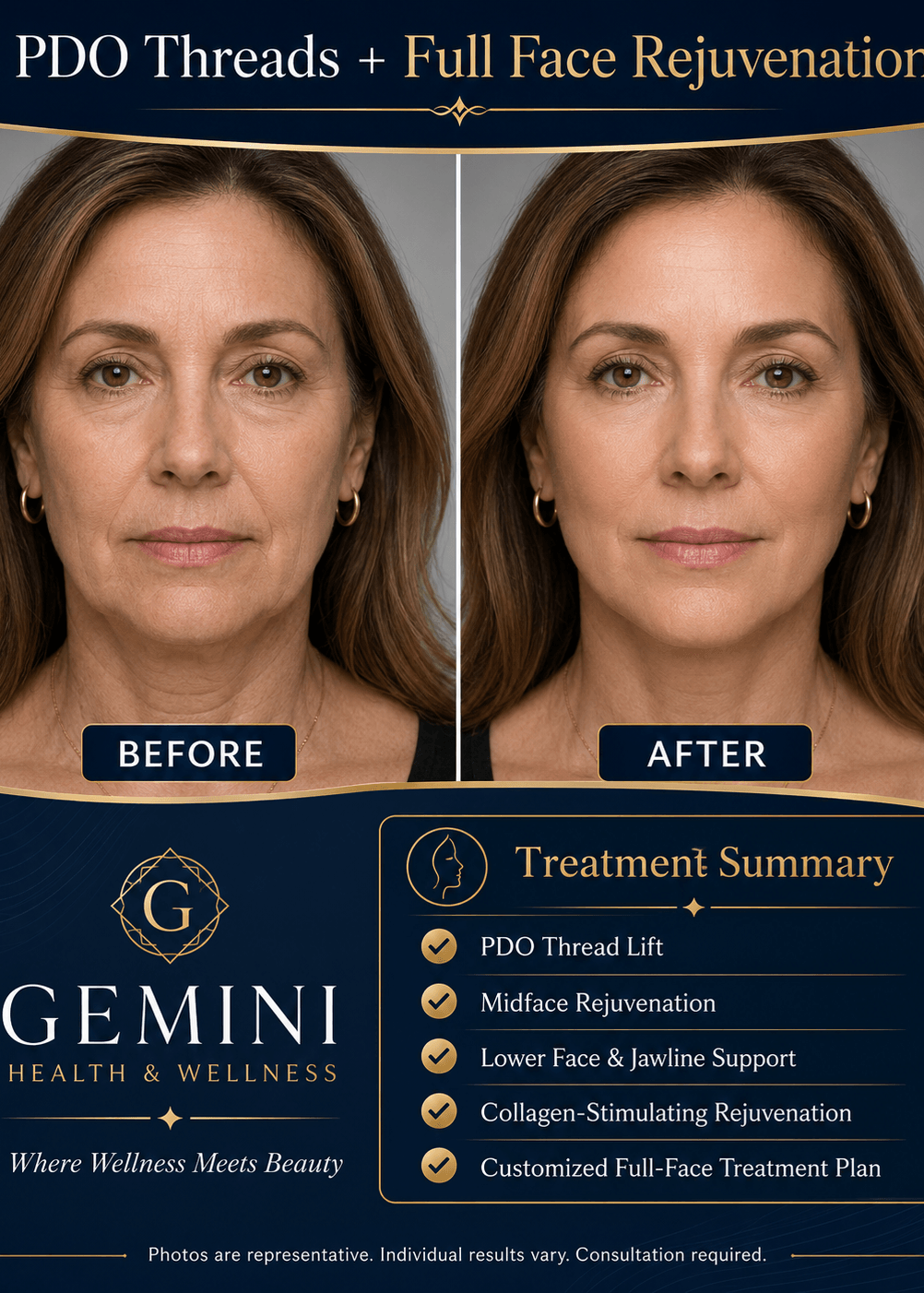
PDO threads for selected lifting concerns
PDO threads may be an option for patients with mild to moderate tissue laxity who want a nonsurgical approach to support and definition. They can be used strategically in areas such as the cheeks, jawline, or brows. Thread treatments require careful patient selection and realistic expectations, as they do not create the same result as surgery and are not the right answer for every degree of sagging.
&srotate=0)
What happens during a facial balancing consultation
A quality consultation should feel like a conversation, not a sales pitch. Your provider should ask what you notice in photos, what has changed over time, and what “natural” means to you. Some patients want a very subtle refresh. Others are comfortable with more visible contouring. Both preferences are valid, but the plan should be medically appropriate and aligned with your goals.
Your provider may assess your face from the front, side, and three-quarter view, as well as when you smile and speak. Photos can help document baseline anatomy and guide treatment planning. Medical history is also essential, including prior injectables, medications, allergies, pregnancy or breastfeeding status, bleeding conditions, and history of cold sores when relevant.
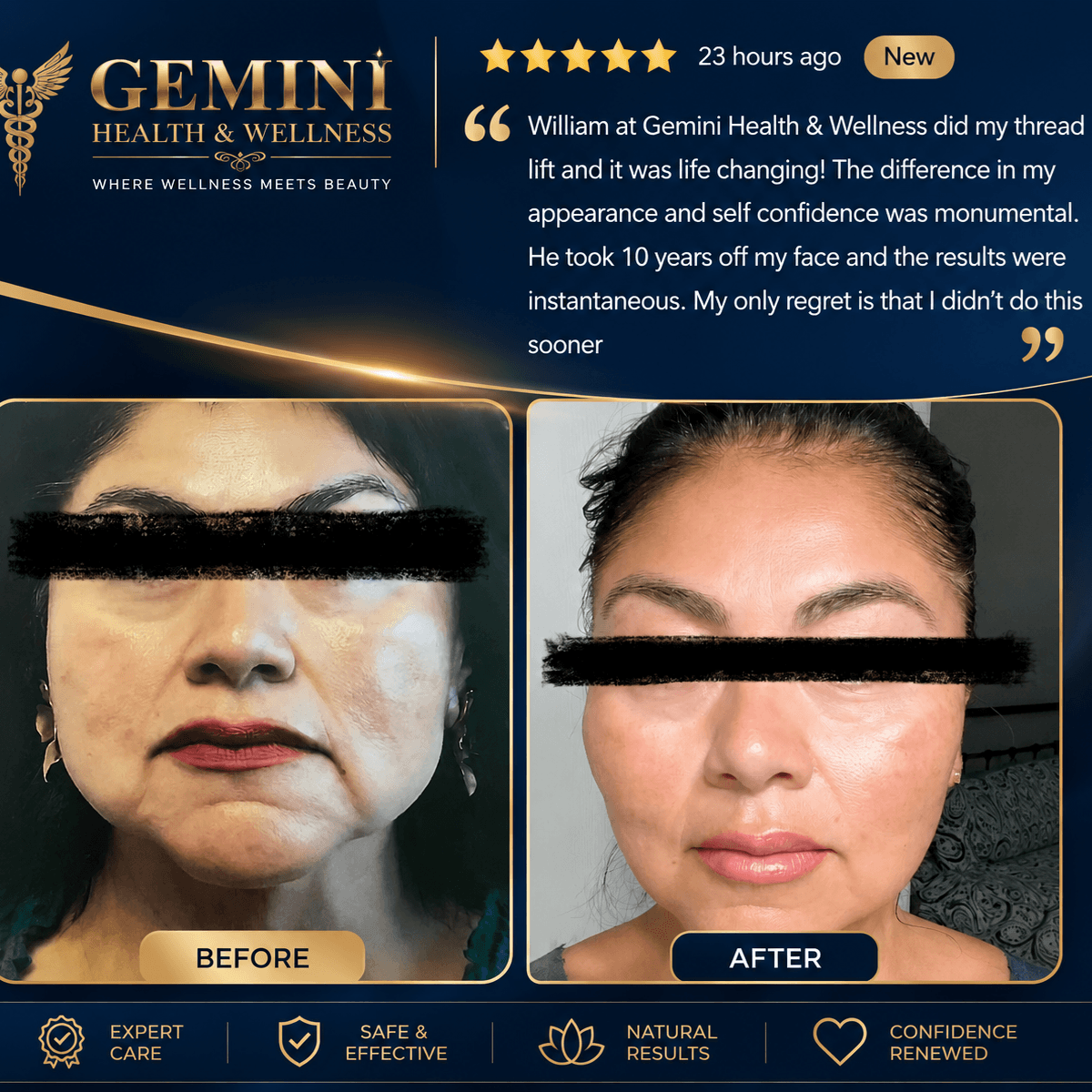
At Gemini Health & Wellness, this consultation-based approach helps ensure that aesthetic recommendations fit within a broader plan for healthy aging and overall well-being. Appearance is connected to factors such as sleep, stress, hydration, weight changes, hormones, and skin health, so a thoughtful plan considers more than a single appointment.
How to approach treatment safely and realistically
Facial balancing should be performed by a qualified, medically trained provider with a detailed understanding of facial anatomy. Injectables are medical treatments, not casual beauty services. Proper technique, product selection, and the ability to recognize and manage complications are central to safe care.
Be cautious of treatment plans built around a trend, a package, or a fixed number of syringes. The amount of filler or number of services that works for one person may be excessive or insufficient for another. It is reasonable to ask why a treatment is recommended, what alternatives exist, how long results may last, and what side effects or downtime to expect.
Bruising, swelling, tenderness, and temporary asymmetry can occur after injectable treatments. More serious complications, while uncommon, are possible and should be discussed before treatment. A reputable provider will give you clear aftercare instructions and let you know when to contact the office.
A phased approach is often the most refined option. Starting conservatively allows you and your provider to see how your features settle and decide whether additional treatment is genuinely needed. This can be especially helpful for first-time filler patients or anyone who wants to avoid an overtreated look.
The role of maintenance and skin health
Facial balancing is not static. Your face changes with time, weight fluctuations, sun exposure, stress, and the natural aging process. Maintenance may include periodic neuromodulator appointments, selective filler touch-ups, collagen-stimulating treatments, and a consistent medical-grade skincare routine.
The strongest long-term results usually come from combining structural treatment with skin care and healthy habits. Daily sunscreen, adequate hydration, quality sleep, protein intake, resistance training, and managing underlying wellness concerns can all influence how your skin and face look over time. These habits will not replace aesthetic treatment, but they can help protect and extend your results.
The most successful facial balancing plan is one that still feels like you. When treatment respects your anatomy, your pace, and your long-term goals, the outcome should look less like you had work done and more like you have been taking good care of yourself.
&srotate=0)