How to Keep Weight Off After GLP-1s: The Maintenance Plan
1/21/2026
How to Keep Weight Off After GLP-1s: A Maintenance Plan That Works
GLP-1 medications have helped thousands of people finally experience weight loss that feels… different. Less food noise. Fewer cravings. Smaller portions without constant willpower battles. For many patients, it’s the first time progress feels steady and sustainable. So it makes total sense that the next question is:
“Can I keep the weight off if I stop?”
Here’s the hope-forward truth: many people can maintain their results especially when they treat stopping (or lowering) GLP-1s as a transition, not a cliff. Weight regain is common when people discontinue without a plan, not because they did anything “wrong,” but because the body is designed to defend stored energy and restore hunger signals after weight loss.
That isn’t discouraging, it's empowering, because it means the solution is not shame or “more discipline.” The solution is a maintenance strategy built on physiology: protect muscle, stabilize appetite, taper thoughtfully, and build a routine that works even when motivation is low.
In this post, you’ll learn:
- what research shows about weight regain after stopping GLP-1s,
- why hunger can rebound (and why it’s not your fault),
- how muscle loss and “catch-up fat” make maintenance harder,
- and a practical, realistic blueprint to keep your results long-term.
(Educational content only, not medical advice. Always work with your prescribing clinician on dose changes and safety.)
The Real Goal Isn’t Just Weight Loss, It’s Maintenance
A good GLP-1 journey isn’t “start, lose weight, stop, and hope for the best.” A good journey looks like this:
Start + lose weight, protect muscle, build habits while appetite is low, taper with intention, and maintain with structure.
That one shift in mindset changes everything. Because if we plan for maintenance from day one, stopping isn’t scary, it’s simply the next phase of the plan.
What the Research Shows (And Why It Shouldn’t Scare You)
Clinical trials consistently show that when GLP-1 therapy is stopped, many participants regain a meaningful portion of lost weight, often within a year, especially without strong ongoing lifestyle support. For example, in a major GLP-1 trial extension, participants regained about two-thirds of their prior weight loss within 12 months after medication withdrawal, with cardiometabolic improvements drifting back toward baseline.
In a large GLP-1/GIP randomized withdrawal trial analysis, most participants (about 82%) who had achieved meaningful weight loss regained >25% of the weight they’d lost within one year after withdrawal, and greater regain was linked with a greater reversal of cardiometabolic benefits.
And a broad analysis in The BMJ (37 studies; over 9,000 participants across several weight-management medications) reported that weight often trends back upward after discontinuation, reinforcing what clinicians see in real life: stopping works best when there’s a maintenance strategy.
Here’s the part people miss: these findings don’t mean GLP-1s “aren’t worth it.” They mean GLP-1s work best when we treat obesity and metabolic dysfunction like what they are for many people—chronic, relapsing conditions that benefit from long-term support.
Sometimes that support is ongoing medication. Sometimes it’s tapering to a lower dose. Sometimes it’s discontinuation with a strong plan. There isn’t one “right” path—there’s the path that fits your body, your health goals, and your life.
Why the GLP-1 Rebound Happens (Biology, Not Willpower)
1) Hunger signaling returns and can feel louder than expected
Weight loss triggers the body to defend its previous “set point.” When GLP-1 appetite suppression fades, hunger can feel like it’s back with a vengeance. Studies show that changes in appetite-related hormones after weight loss can be part of the body’s drive to restore weight.
Translation: Your body isn’t trying to sabotage you. It’s trying to survive based on old programming.
2) Appetite can return faster than your satiety rhythm
GLP-1 medications influence both gut signals and brain signals (including appetite centers). When doses drop, it’s common for hunger cues to reappear before your fullness cues feel reliable again. That mismatch can create a short-term “hyper-hunger” window.
- What patients describe:
- “I’m hungry sooner after meals.”
- “Snacking sounds good again.”
- “Food noise is back.”
That’s not failure. It’s timing. And timing can be managed.
3) Lean muscle can decrease during weight loss shrinking the “engine”
During weight loss, it’s common to lose a mix of fat mass and lean mass. Multiple analyses and reviews have highlighted that GLP-1–associated weight loss can include reductions in lean mass, though outcomes vary and can be improved with protein and resistance training.
Less lean mass can mean:
- lower resting energy expenditure,
- less strength and stamina,
- easier fat regain when appetite returns.
This is why muscle protection is the biggest “anti-rebound” lever you have.
4) Fat can return faster than muscle (“catch-up fat” / preferential fat regain)
After weight loss, the body may preferentially restore fat stores—especially when energy expenditure is suppressed (adaptive thermogenesis). This “catch-up fat” pattern is described in human physiology research and helps explain why regain can feel fast.
Translation: If you regain, it may come back as fat faster than muscle rebuilds—unless you actively protect and train your lean tissue.
The Good News: Maintenance Has a Blueprint
When patients maintain well after lowering or stopping GLP-1s, they usually have these 5 things in common:
- A protein floor (non-negotiable minimum)
- Strength training (not optional—protect the engine)
- Fiber + volume foods (mechanical satiety when doses drop)
- A taper strategy (not abrupt stopping)
- A routine that survives real life (stress, travel, busy weeks)
Let’s walk through each one.
&srotate=0)
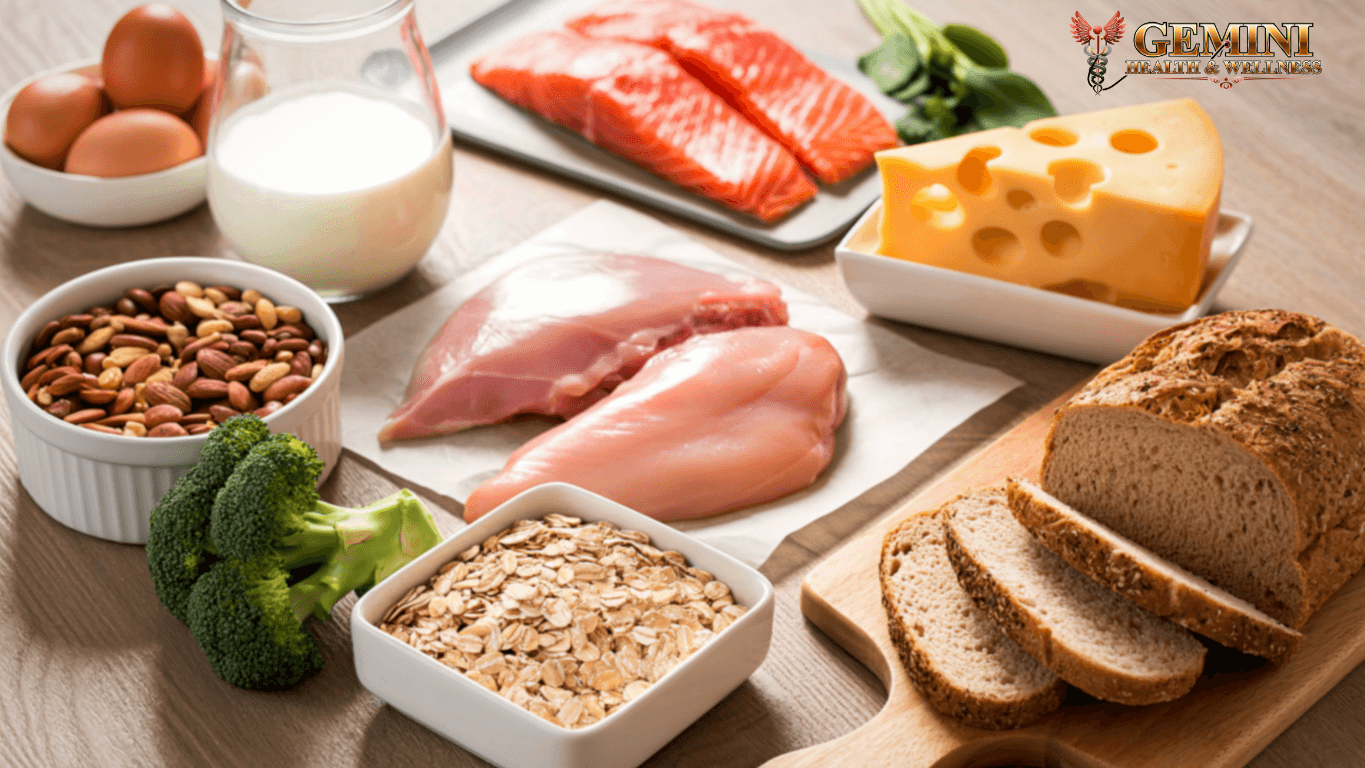
1) The Protein Floor: Your Daily Non-Negotiable
When appetite is low, protein is often the first thing to disappear. But from a maintenance standpoint, protein is the one macronutrient you can’t “wing.”
Protein supports:
- lean mass retention,
- satiety,
- stable blood sugar,
- and better body composition outcomes while weight changes.
A practical approach (not a rigid rule):
- Aim for a protein anchor at every meal.
- Build the plate protein-first.
- Use “easy proteins” to avoid skipping when busy.
When solid food feels heavy, try these options
- Clear whey isolate (easy to sip)
- Greek yogurt or dairy proteins (if tolerated)
- Egg-white protein
- Ready-to-drink high-protein shakes (watch added sugars)
- Collagen plus essential amino acids (collagen alone isn’t complete)
- EAA blends (often leucine-forward) to support muscle protein synthesis
Key idea: Muscle is metabolic insurance.
If you protect muscle, your “maintenance calories” stay higher and your body composition stays healthier.
2) Strength Training: The Anti-Rebound “Medication” You Control
If there’s one habit that consistently separates maintainers from rebounders, it’s resistance training. Not because cardio is bad—but because strength training is the most direct way to tell your body, “Keep the muscle.”
Minimum effective dose
- 2 days per week (full body) = powerful
- 3–4 days per week = ideal if your schedule allows
Simple movement categories (keep it repeatable)
- Squat pattern: squat or leg press
- Hinge: deadlift pattern / Romanian deadlift
- Push: dumbbell press / push-ups
- Pull: rows / lat pulldown
- Core/carry: farmer carries, planks, anti-rotation
You don’t need perfection. You need consistency.
Why it matters during tapering:
As appetite increases, training preserves lean mass and helps partition calories toward muscle repair instead of fat regain.
&srotate=0)
3) Taper Slowly: Avoid “Appetite Whiplash”
One reason discontinuation feels hard is that stopping abruptly can create a sudden appetite rebound.
A thoughtful taper (under clinician guidance) gives your body time to:
- recalibrate hunger signaling,
- re-establish reliable satiety,
- strengthen routines while the “training wheels” are still on,
- and stabilize weight before the next reduction.
Hope-forward reframing:
Tapering isn’t “dragging it out.” It’s setting yourself up to win.
4) Fiber as a Mechanical Satiety Tool
When GLP-1 doses decrease, your stomach and gut signals become louder again. Fiber helps by creating volume, slowing digestion, and supporting fullness.
Go-to fiber foods (high volume, high payoff)
- oats
- beans and lentils
- berries
- vegetables (especially cruciferous)
- psyllium husk (start low, increase slowly, hydrate well)
Pro tip: Pair fiber + protein.
Fiber makes you full. Protein makes you satisfied.
&srotate=0)
5) Monitor Mood, Motivation, and Joy (Yes, Really)
Some patients notice shifts in motivation or emotional tone during GLP-1 therapy or during dose changes. GLP-1 signaling interacts with brain pathways involved in appetite and reward.
At the same time, the safety data on suicidality has been heavily scrutinized. In January 2026, the FDA reported that its evaluation did not identify an increased risk of suicidal ideation or behavior with GLP-1 receptor agonists and requested removal of suicidality warnings from certain GLP-1 labels for consistency.
Practical takeaway:
If you notice any of the following especially around dose changes talk to your clinician promptly:
- persistent low mood
- emotional “flatness”
- reduced motivation
- loss of interest in activities
- increased anxiety
- sleep disruption
Your emotional health is part of maintenance. If you’re not okay, routines won’t stick.
The 12-Week Off-Ramp Blueprint (Practical, Realistic)
This is a general framework not a medical plan but it shows what “success” often looks like in real life.
Weeks 1–4: Build the Foundation (while appetite support is still strong)
Targets:
- Protein floor daily
- Strength training 2x/week minimum
- Fiber added to 1–2 meals/day
- Step goal: baseline + a small increase (even +1,000/day helps)
Win condition: You’re not relying on motivation, you’re building structure.
Weeks 5–8: Strengthen the System (taper-friendly routine)
Targets:
- Strength training 3x/week if possible
- A default breakfast + default lunch you can repeat
- Fiber-forward snack strategy (planned, not random grazing)
Win condition: You can have a busy week and still hit the basics.
Weeks 9–12: Transition with Confidence (your maintenance identity)
Targets:
- Keep protein stable even if hunger rises
- Increase “volume foods” (soups, salads, veggies, legumes)
- Track the right metrics (more below)
Win condition: Appetite changes don’t throw you off course, you respond with a plan.
Track the Right Metrics (Not Just the Scale)
The scale is one data point. Maintenance is better measured with a dashboard:
1) Waist measurement (often correlates better with metabolic health)
2) Strength performance (are you maintaining or improving lifts?)
3) Protein consistency (did you hit your floor?)
4) Steps/activity (did movement drop when life got hectic?)
5) Body composition (at Gemini Health & Wellness we use the InBody 580 Scan —lean mass is key)
When people only track weight, they miss what’s happening underneath. When you track muscle-supportive behaviors, maintenance becomes predictable.
&srotate=0)
Frequently Asked Questions (What Patients Actually Want to Know)
1. “Does stopping mean I will regain?”
Not necessarily. But research and real-world experience show regain is common without a plan and support structure. The goal is to reduce the odds of rebound by protecting muscle, using fiber strategically, and tapering thoughtfully.
2. “Is it okay to stay on a GLP-1 long-term?”
For many patients, yes—under medical supervision—because obesity and metabolic dysfunction often behave like chronic conditions. Long-term outcomes are an active area of study, and the decision should be individualized based on benefits, risks, side effects, affordability, and health goals.
3. “What if I can’t afford to stay on it?”
This is one of the most common reasons people discontinue. If cost is a barrier, the best strategy is to start building the off-ramp early:
- lift consistently
- lock protein
- build a simple repeatable meal pattern
- use fiber to support satiety
Even a few months of structured preparation can change the outcome.
4. “What matters more: diet or exercise?”
For maintenance after GLP-1s: both matter, but strength training is the multiplier because it protects the metabolic engine and body composition. Pair it with a protein-forward eating pattern and you get the best of both worlds.
Bottom Line: You Can Keep Your Results—With a Plan
If you remember nothing else, remember this: Rebound hunger and weight regain are predictable physiological responses and predictable things can be planned for.
Your best anti-rebound strategy is not “more willpower.” It’s:
- a protein floor
- strength training 2–4x/week
- a clinician-guided taper (when appropriate)
- fiber + volume foods
- and attention to sleep, mood, and routine
With that blueprint, stopping (or lowering) GLP-1 therapy becomes a transition you can navigate confidently—not something you fear.
Consultation in Roseville, CA (Optional, No Pressure)
At Gemini Health & Wellness in Roseville, CA, we help patients create a personalized maintenance plan—whether you’re continuing GLP-1 support, tapering, or preparing to discontinue.
A consultation can include (as desired):
- Medical Evaluation
- Blood Test
- Hormone Evaluation
- body composition goals and lean-mass protection strategies
- protein targets and realistic meal structure
- strength training guidance for your schedule and fitness level
- fiber/satiety tools for tapering
- mood, sleep, and stress support for long-term success
If you’d like a clear off-ramp plan tailored to your body and lifestyle, schedule a consultation.
&srotate=0)
Gemini Health & Wellness Weight loss Special Semaglutide Starting at $350/month