Cheek Filler Before and After: What to Expect
6/29/2026
A lot of people searching for cheek filler before and after photos are not looking for dramatic change. They want to know one thing: will I still look like myself, just more rested, lifted, and balanced? That is the real question, and it matters more than any single photo online.
Cheek filler can create a meaningful difference, but the best results usually do not look obvious. They look like better structure, softer shadows, and a face that appears less tired. For some patients, the change is subtle but powerful. For others, it is part of a broader facial balancing plan that improves the under-eyes, smile lines, or jawline at the same time.
What cheek filler before and after really shows
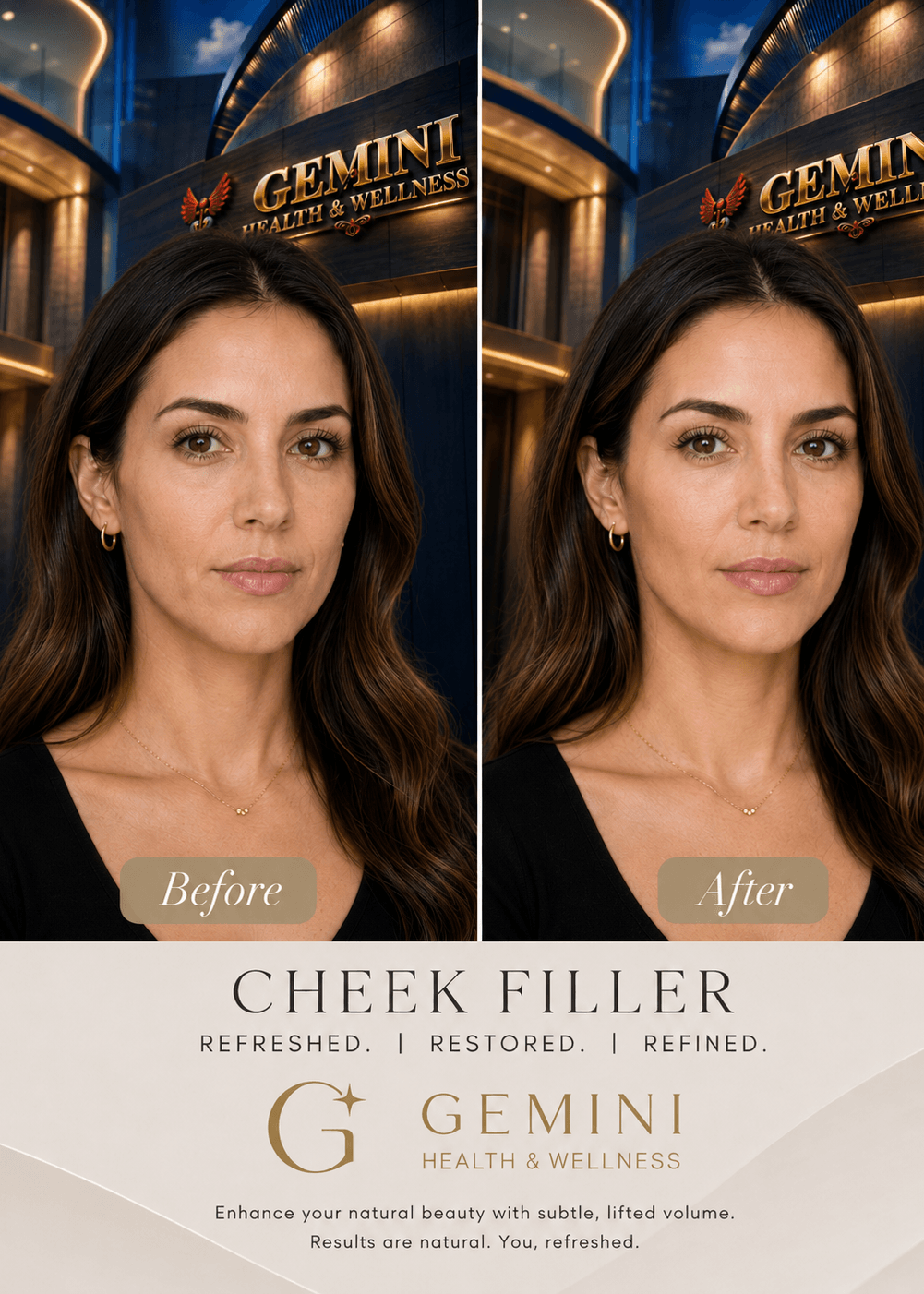
Before and after images can be helpful, but they only tell part of the story. A photo may show more projection in the midface, improved contour over the cheekbone, and less heaviness around the lower face. What it cannot fully show is why one patient needed volume in a specific area or why another needed only a small amount to get a natural result.
Cheek filler is not just about making the cheeks bigger. In a clinically guided treatment plan, it is used to restore support where volume has thinned, improve facial proportions, and create a smoother transition from the lower eyelid to the cheek. That is why good cheek filler often makes the whole face look more refreshed.
Age, facial anatomy, skin quality, and lifestyle all influence the outcome. Someone in their 30s may use cheek filler to enhance contour and definition. Someone in their 50s or 60s may be treating age-related volume loss that has changed the shape of the midface and contributed to sagging or hollowing. The same product category can serve very different goals.
How cheek filler changes the face
The cheeks are a structural area. When volume is lost there, the face can start to look flatter, heavier, or more fatigued. Restoring support in the midface often improves more than one concern at once.
For many patients, cheek filler softens under-eye hollowness by improving the support beneath that area. It can also reduce the appearance of nasolabial folds, not by filling the fold directly, but by lifting and supporting the tissue above it. In the right patient, this creates a cleaner, more natural result than chasing lines lower in the face.
This is where expertise matters. Too much product, poor placement, or a one-size-fits-all approach can create puffiness or an overfilled look. The goal is not volume for the sake of volume. The goal is shape, support, and balance.
Common improvements seen after treatment
A natural cheek filler result may include more definition along the cheekbone, softer shadows beneath the eyes, and better facial harmony from the front and side. Some patients also notice that their makeup sits better or that they look less tired in photos.
What you should not expect is a total transformation overnight. The strongest results usually come from thoughtful planning, precise placement, and the right amount of filler for your anatomy.
What to expect right after cheek filler
Immediately after treatment, your cheeks may look fuller than expected. That does not mean the final result is too much. Swelling is normal, and early fullness often settles over the first several days.
You may also have tenderness, minor redness, or bruising at the injection sites. Some people return to work the same day, while others prefer a few days before social events. If you are planning treatment ahead of a wedding, vacation, or important meeting, giving yourself at least two weeks is a smart buffer.
Most patients start to get a more realistic sense of their result once swelling decreases. The final look is usually easier to judge around the two-week mark. That is one reason experienced injectors often recommend patience before deciding whether more product is needed.
Cheek filler before and after at 2 weeks vs. 6 months
One of the biggest misconceptions about cheek filler is that the immediate result and the long-term result are the same. They are not. Early photos can show post-treatment swelling, while later photos reveal how the filler integrates with the tissue and how the face settles.
At around two weeks, the cheeks typically look more refined and less puffy than they did in the first few days. At several months, the result often appears even more natural because the face has fully adjusted. This is why follow-up matters. Treatment should be assessed over time, not just in the mirror on day one.
Longevity depends on the type of filler used, your metabolism, your activity level, and how much product was placed. Many patients enjoy results for several months to over a year, but there is no universal timeline. A consultation is the best place to discuss realistic expectations based on your goals.
&srotate=0)
Who gets the best cheek filler results?
The best candidates are not defined by age alone. They are people who want improved structure or restored volume without surgery and who value natural-looking change. They also tend to do well when they understand that facial aging is not caused by one issue.
For example, if skin laxity is significant, filler alone may not create the outcome you want. If the main concern is skin texture or crepey skin, energy-based treatments or collagen-stimulating options may be more relevant. If the under-eye area is the primary issue, the cheeks may still need to be addressed first, but not always with a large amount of product.
This is where a consultation-driven approach matters. At Gemini Health & Wellness, treatment planning is built around facial anatomy, aging patterns, and your long-term goals, not just what is trending or what looks dramatic on social media.
How to avoid an overfilled look
Most patients are not worried about filler itself. They are worried about looking like they had filler. That concern is valid, and it usually comes down to technique, restraint, and planning.
A natural outcome often starts with conservative dosing. It is usually better to build gradually than to overcorrect in one session. Product choice matters too. Different fillers have different levels of structure, softness, and lift. The right one depends on whether the goal is contour, support, or subtle restoration.
It also helps to treat the face as a whole. Sometimes cheeks are the right starting point, but not the only area to consider. In some patients, balancing the chin, jawline, or skin quality creates a better outcome than adding more volume to the midface.
Questions worth asking at your consultation
Ask what kind of result is realistic for your anatomy, how much filler may be needed, and whether cheeks are the best place to start. You should also ask how swelling may affect your early appearance and when to expect your final result.
A strong consultation should feel personalized, not rushed. You should leave with a clear understanding of what the treatment can improve, what it cannot, and whether another approach may serve you better.
The role of wellness in aesthetic results
Aesthetic treatments do not happen in isolation. Hydration, inflammation, sleep, stress, hormone balance, and overall skin health can all affect how refreshed your face looks. Filler can restore volume, but it cannot replace the benefits of taking care of the body as a whole.
That is one reason many patients today want more than a standard med spa experience. They are looking for medical guidance that supports appearance and long-term vitality together. When treatment decisions are made in that broader context, the results often feel more aligned with how people actually want to age - naturally, confidently, and with a plan.
If you are looking at cheek filler before and after examples, use them as a starting point, not the final answer. The best result is not the most dramatic photo. It is the one that fits your face, your goals, and the way you want to look when someone says, "You look great," without quite knowing why.