Best Treatment for Hyperpigmentation?
7/6/2026
Some dark spots fade with time. Others stay put for months, get darker with sun exposure, or come right back after you thought they were gone. That is usually the point when people start searching for the best treatment for hyperpigmentation, and the honest answer is that it depends on why the pigment showed up in the first place.
Hyperpigmentation is not one single condition. It is a visible result of excess melanin production, but the trigger can vary widely. Sun damage, acne, heat, hormones, inflammation, skin injury, and even aggressive skincare can all play a role. If you want better results and fewer setbacks, the first step is understanding what kind of discoloration you are treating.
What counts as hyperpigmentation?
Hyperpigmentation is a broad term for patches or spots of skin that appear darker than the surrounding area. In practice, most people fall into one of three categories.
Sun spots, sometimes called age spots or solar lentigines, are usually caused by cumulative UV exposure. They often show up on the cheeks, forehead, chest, and hands. Post-inflammatory hyperpigmentation happens after acne, irritation, eczema, or a skin injury and tends to leave behind brown, gray, or even reddish marks once the original issue calms down. Melasma is more complex. It often appears in symmetrical patches on the face and is strongly influenced by hormones, heat, and sunlight.
Those distinctions matter because a treatment that works beautifully for sun spots may irritate melasma. A device that brightens one patient’s complexion may worsen pigment in another if the skin is not properly prepared. That is why a personalized plan almost always outperforms a one-size-fits-all approach.
The best treatment for hyperpigmentation depends on the cause
If there were one universal fix, hyperpigmentation would be much easier to treat. In reality, the best treatment for hyperpigmentation is usually a combination of daily pigment control, strict sun protection, and in-office procedures chosen for your skin type and pigment pattern.
For mild discoloration, medical-grade topical skincare may be enough. For more stubborn pigment, especially pigment that has been present for months or years, professional treatment tends to produce faster and more visible change. The key is choosing the right intensity. Too little treatment can be frustrating. Too much treatment can trigger inflammation and create even more pigment.
&srotate=0)
For sun spots, targeted resurfacing often works well
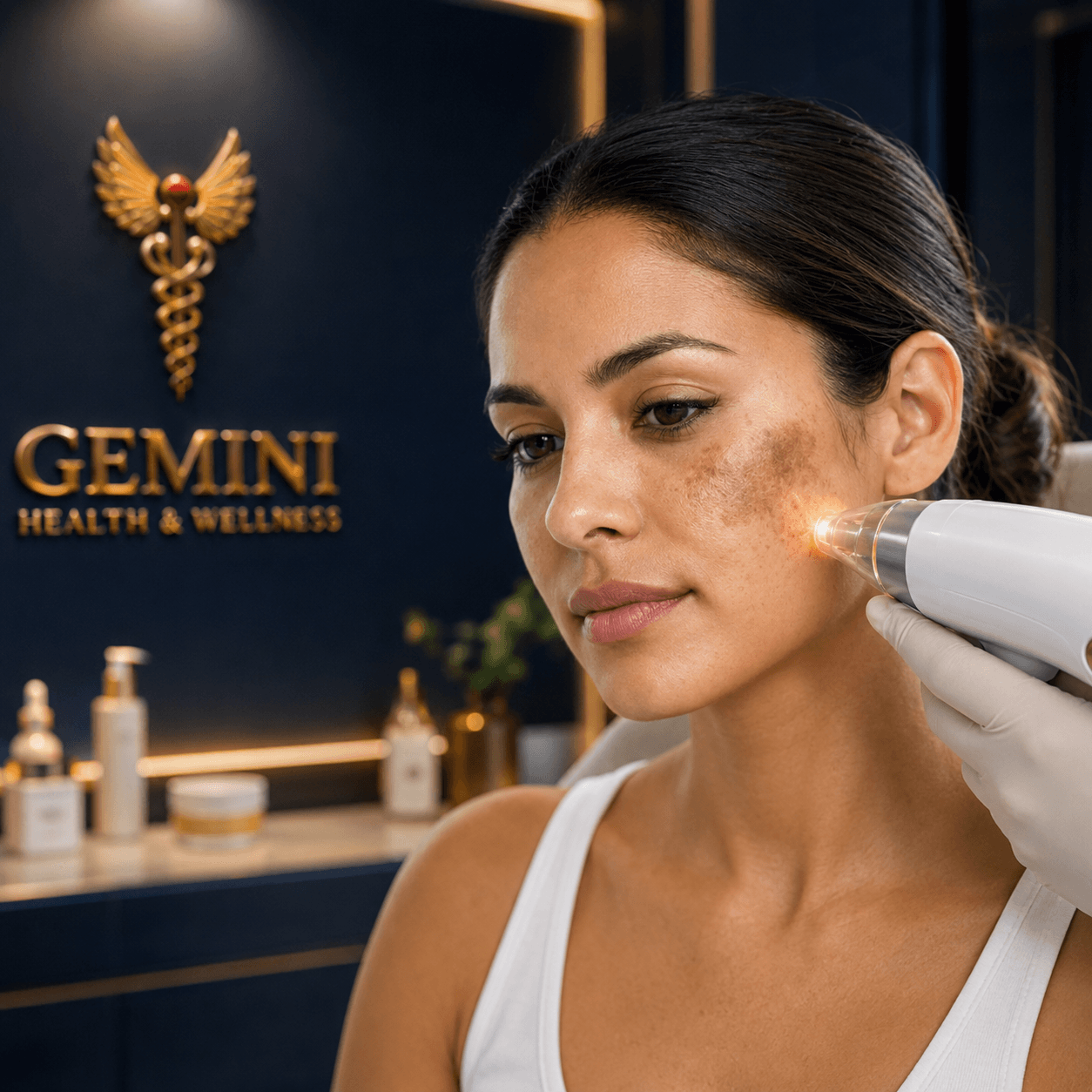
Sun spots generally respond well to treatments that address visible pigment near the surface. Depending on the skin and the depth of the discoloration, options may include laser skin rejuvenation, chemical exfoliation, or other corrective procedures designed to break up pigment and improve overall tone.
This category is where many patients see some of the most satisfying improvement because the pigment is often more defined and easier to target than melasma. That said, results still depend on consistency after treatment. If UV exposure continues without proper protection, new spots can develop and treated skin can darken again.
For post-acne marks, skin renewal and pigment regulation matter
Post-inflammatory hyperpigmentation is common after breakouts, especially in skin that produces pigment easily. In these cases, the treatment plan often has to do two jobs at once: calm ongoing acne activity and fade the marks left behind.
This is where a combination approach makes sense. Brightening topicals can help regulate pigment production, while procedures such as microneedling or select rejuvenation treatments may support skin renewal and improve overall texture. The timing matters. If active inflammation is still present, pushing the skin too aggressively can prolong the cycle.
For melasma, caution usually beats intensity
Melasma is often the most stubborn form of facial hyperpigmentation because it is influenced by internal and external triggers at the same time. Hormones, visible light, heat, and sun exposure can all contribute. That is why melasma often improves, then flares again.
In many cases, the best strategy is not the strongest treatment. It is the smartest one. Melasma usually responds best to consistent pigment-suppressing skincare, mineral sunscreen, and carefully selected in-office treatments that support the skin without provoking rebound discoloration. Aggressive heat-based procedures can be helpful for some patients but can also make melasma worse if not chosen carefully.
Topical skincare is the foundation, not the whole plan
Patients often want to know whether they can treat hyperpigmentation with products alone. Sometimes yes, but usually only if the discoloration is mild or relatively new. More often, skincare is the foundation that makes professional treatment safer and more effective.
Useful ingredients may include hydroquinone, retinoids, vitamin C, azelaic acid, tranexamic acid, kojic acid, and niacinamide. Each works a little differently. Some slow melanin production, some increase cell turnover, and some help reduce inflammation that can keep pigment active.
What matters most is not using every brightening product at once. Overdoing exfoliants, acids, and active ingredients can weaken the skin barrier and trigger irritation, which is exactly what hyperpigmentation-prone skin does not need. A clinically guided routine is often simpler than people expect and more effective than a bathroom shelf full of random products.
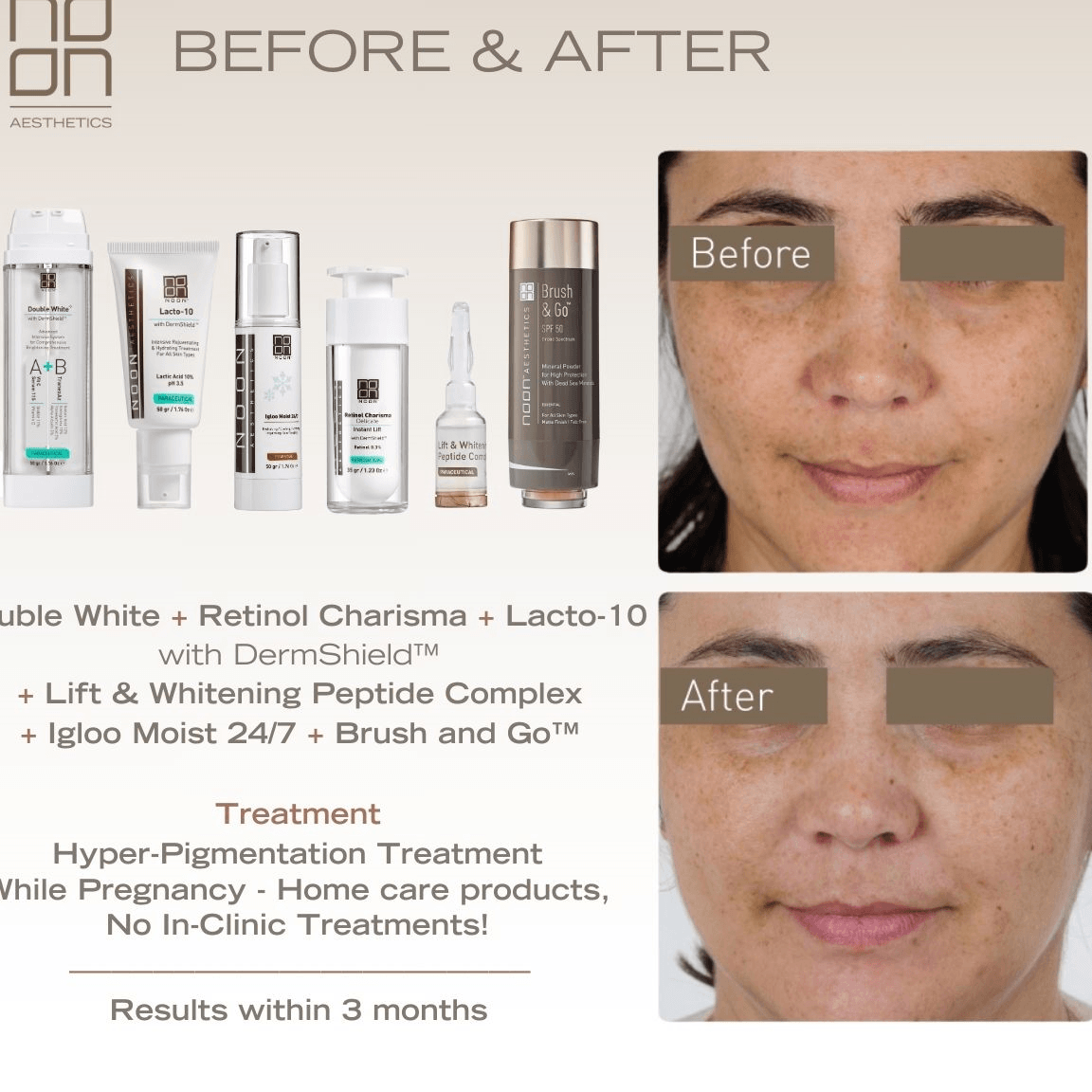
Noon Aesthetics is our primary and Best Selling brand for skin care!
&srotate=0)
Professional treatments that can improve hyperpigmentation
In-office treatment can make a meaningful difference when pigment is stubborn, widespread, or tied to broader concerns like uneven texture or dullness. The best procedure depends on your skin tone, the depth of the pigment, your tolerance for downtime, and whether the discoloration is stable or easily triggered.
Laser skin rejuvenation can help break up visible pigment and improve tone, particularly for sun damage and select types of discoloration. Microneedling may support cell turnover and improve post-inflammatory marks, especially when part of a larger plan. RF microneedling can be useful for patients who want skin renewal benefits while also addressing texture concerns, though pigment-prone skin should always be evaluated carefully. Gentle exfoliating or hydrating treatments may also be used to support brighter skin over time when a more aggressive option is not appropriate.
The trade-off is that faster treatments are not always the safest treatments for every skin type. Deeper skin tones and melasma-prone patients often need a more conservative strategy to lower the risk of rebound pigmentation.
Why sunscreen is part of the best treatment for hyperpigmentation
If you are investing in brightening products or in-office procedures but skipping sunscreen, you are making the process harder than it needs to be. Daily UV protection is not an optional extra. It is part of treatment.
Pigment cells are reactive. Even small amounts of sun exposure can keep hyperpigmentation active, and for some patients, visible light and heat matter too. Broad-spectrum sunscreen worn every day, plus hats and shade when possible, helps protect the progress you are paying for. For melasma in particular, this step can be the difference between temporary improvement and longer-lasting control.
Why a consultation matters more than trend-driven advice
Online skincare advice tends to flatten everything into a single recommendation. Use this serum. Try that peel. Buy this device. But hyperpigmentation is one of the clearest examples of why skin needs medical assessment, not guesswork.
A proper consultation looks at where the pigment sits, what triggered it, how long it has been present, your skin tone, your history with irritation, and whether other factors such as acne or hormones are involved. That is what allows a provider to build a plan that is realistic and safe.
At a clinic like Gemini Health & Wellness, that personalized approach matters because treatment is not just about removing a dark spot. It is about improving skin quality in a way that fits your long-term goals and protects your results.
What to expect from treatment
Hyperpigmentation rarely disappears overnight, even with excellent care. Some patients see visible brightening within a few weeks, while others need several months of consistent treatment. Melasma often requires ongoing maintenance. Post-acne marks may fade gradually once breakouts are controlled. Sun spots may respond more quickly when targeted appropriately.
That does not mean the process is failing. It means pigment has a timeline. The most successful patients tend to be the ones who commit to the full plan, including home care, sun protection, and follow-up rather than chasing a quick fix.
If you are trying to figure out the best next step, think less about the strongest treatment and more about the right one for your skin. When hyperpigmentation is approached with precision, patience, and a plan built around the cause, clearer and more even-looking skin becomes a much more realistic goal.